

After being named in the DataIQ 100 list of the most influential data and AI leaders for the second year in a row, we spoke with Cengiz Ucbenli, Centrica’s Chief Data Analytics Officer, about how data and AI are supporting the business to deliver more for customers.
Welcome to ‘In Conversation with…’ Cengiz. Please start by telling us a bit about yourself and your career to date.
I started my career as a data scientist, working across a number of sectors. Over the years, I’ve had the opportunity to lead and develop teams focused on using data and AI to drive meaningful impact.
I’ve also been fortunate to work across three major industries - financial services, telecommunications, and energy - while living in three globally significant cities: New York, Istanbul and London. Each experience has shaped my perspective on how data can be leveraged to solve complex business challenges.
Now at Centrica, I’ve had the privilege of building a talented data and AI team from the ground up. Our focus is on leveraging AI to enhance customer experiences and enable data-driven decision-making across the organisation.
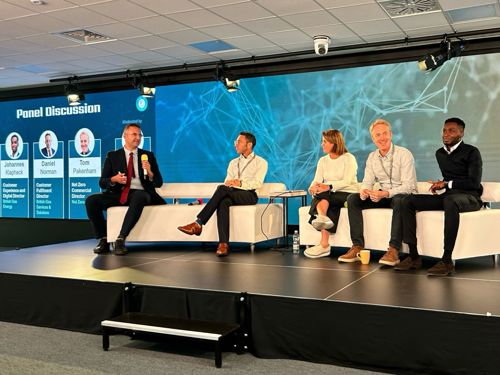
"AI isn’t here to replace people but to enhance decision-making, automate tasks, and unlock new opportunities. Data leaders will play a key role in ensuring AI is seen as an enabler, not a threat, while also helping colleagues across all functions become more data-savvy."
With the data and AI landscape evolving rapidly, what are your go-to sources for staying informed and up to date?
Like most in the field, I keep up with business press, academic research, trade publications and industry discussions on social media. However, one of the most valuable ways to stay informed is through networks and industry communities.
I regularly engage with others in the data and AI community, exchanging insights on emerging trends, new technologies and practical challenges. Learning from others’ experience and sharing my own helps me stay ahead of the curve.
Can you share a data or AI use case you’ve implemented in your current role that you’re especially proud of? What made it significant to you?
At Centrica, our focus is always on making things better for our customers. We often hear ideas from colleagues on how to improve customer service, but many of them don’t have the time, resources or technical background to bring their ideas to life.
Over the past year, my team has met with colleagues to understand their challenges and how we could support them. We quickly realised that fragmented data silos were preventing us from getting a complete customer view.
Working closely with teams across the business, we developed a ‘Single Customer View’, which is a unified data foundation that aggregates, cleans and organises information across the organisation. This initiative has the potential to support many AI-driven projects at scale, enhancing customer interactions and driving commercial growth. More importantly, it lays the foundation for delivering more personalised and seamless customer experiences.
How do you ensure you have the right level of business sponsorship and support for your team?
To gain leadership support, we align our team’s objectives with the broader business goals. By focusing on customer-centric, high-value projects, we demonstrate the tangible impact data and AI can have.
Another key aspect is building strong partnerships across the organisation. We work closely with colleagues to co-design solutions, ensuring they address real challenges. This collaborative approach fosters trust and makes it easier to secure sponsorship.
Additionally, because our team has visibility across the business, we often connect departments with similar AI goals, helping them share resources and avoid duplication of effort. This not only saves time and costs but also accelerates innovation across the company.

How do you see the role of the data leader evolving over the next 12-24 months?
I see the role evolving in three keyways:
Demystifying AI and promoting data literacy – AI isn’t here to replace people but to enhance decision-making, automate tasks, and unlock new opportunities. Data leaders will play a key role in ensuring AI is seen as an enabler, not a threat, while also helping colleagues across all functions become more data-savvy. Making data accessible and empowering teams to use it effectively will be crucial for long-term success.
Navigating AI laws and regulations – With AI regulations evolving rapidly, data leaders will need to stay informed and proactively integrate compliance into their strategies. Keeping up with ethical AI guidelines, ensuring transparency, and embedding responsible AI practices will be crucial in maintaining trust and long-term success.
Focusing on impact, not hype – there’s a growing demand for AI solutions, but not all requests align with business priorities. Data leaders will need to help organisations focus on AI projects that drive real value, rather than implementing AI just for the sake of it. The challenge will be balancing innovation with practicality, prioritising projects that enhance customer experiences and improve efficiency.
Thank you for your time, Cengiz.

Case Study
From ASHP to ZEV – Our Guide to Energy’s Many Confusing Acronyms
Technology

Case Study
Lighting up London for 200 years
Our People

Case Study
We’re on the MAP
Net Zero

Blog
Battery storage – the ying to renewables' yang
Technology

Case Study
Electric vehicles are helping to drive a revolution in energy use
Technology
Blog
The drive for Diversity in the UK Tech sector
Technology